Best Side Pressure Pool Cleaners for in-Ground Pools: Efficient, All-Season Debris Removal
Side pressure pool cleaners harness the water pressure from a pool’s return line to power cleaning action without relying on a dedicated booster pump for every model. They’re designed to tackle floors, walls, and various debris types across most in-ground pool shapes and surfaces. This guide highlights five top options, detailing how they perform, what setups they require, and how they compare on coverage, maintenance, and durability. Whether you’re upgrading an aging cleaner or choosing a first one, these picks offer strong vacuum power, robust build quality, and practical design features for American backyards.
Below is a quick summary table of the chosen products to help you compare at a glance.
| Product | Brand | Key Benefit | Typical Use |
|---|---|---|---|
| Polaris Vac-Sweep 280 | Polaris | Fast, comprehensive floor and wall cleaning with dual venturi power | All-in-ground pools |
| Polaris Vac-Sweep 360 | Polaris | Three-venturi precision with dedicated return line | In-ground pools with proper line setup |
| Polaris Quattro P40 | Polaris | Large debris intake with dual-filtration canister | All-in-ground surfaces |
| Zodiac MX6 | Zodiac | Compact suction-side design with cyclonic suction and X-Trax | In-ground pools via skimmer or dedicated line |
| MAKHOON Upgrade Pool Pressure Side Sweeper | MAKHOON | Four-wheel stability and extended cleaning reach | All-in-ground pools |
Polaris Vac-Sweep 280 Pressure-Side In-Ground Cleaner

The Polaris Vac-Sweep 280 is a pressure-side cleaner designed for in-ground pools. It operates with a separate booster pump for enhanced suction from dual venturi jets, delivering reliable cleaning in about three hours. It is compatible with a wide range of pool shapes and surfaces, including vinyl, fiberglass, gunite, pebble, and tile. Its large 2.25-inch inlet enables the pickup of sizeable debris that stumbles other cleaners, enabling more complete floor and wall coverage. The unit sweeps and scrubs surfaces efficiently, minimizing missed spots and reducing manual intervention.
Performance notes highlight smooth movement along floors and walls with a focus on avoiding tangling and maintaining steady suction. Users should verify booster pump compatibility and ensure the pool’s plumbing can support the dual-jet design for optimal results. Routine maintenance involves cleaning the debris bag and inspecting hoses for wear. The Vac-Sweep 280 is well-suited for households seeking solid, all-around debris removal with predictable 3-hour cleaning windows.
MAKHOON Upgrade Pool Pressure Side Sweeper

The MAKHOON upgrade model emphasizes durability and efficient ground coverage with a four-wheel design. It mentions long-lasting plastics and an upgraded build intended for extended cleaning sessions. A 1.5-inch female thread for the booster pump inlet and 4-bar water pressure are required for operation. The unit includes guidance for avoiding hose tangling, such as straightening the hose after shipping, properly orienting the backup valve, and adding extra float balls to manage flow. The cleaning trajectory is optimized to reach corners and steps, with a focus on thoroughness across pool shapes.
Maintenance guidance stresses the availability of replacement parts and user-friendly upkeep to keep performance high over years of use. It’s a solid choice for pool owners seeking a four-wheel, stability-focused sweeper that can handle larger or more stubborn debris with consistent performance.
Amptyhub Upgrade Pool Pressure Side Sweeper

The Amptyhub pressure side sweeper targets efficient and broad coverage across pool surfaces. It emphasizes long operation time and comprehensive cleaning with guidance to adjust jet power direction as needed. The design prioritizes easy maintenance and reliability, with a note that debris bag replacement parts are compatible with the 380 configuration. A second booster pump is required to operate this model, which is a consideration for setup and plumbing. The unit aims to minimize debris escape and maximize wall and floor cleaning performance with straightforward upkeep.
Polaris Vac-Sweep 360 Pressure-Side Cleaner

The Polaris Vac-Sweep 360 operates without the need for a booster pump, powered by the return line to push the cleaner forward. It is designed for in-ground pools and can be retrofitted to dedicate a return line if needed. The cleaner features three venturi jets to deliver strong vacuum power and a larger 2.25-inch inlet for picking up substantial debris. This model is compatible with various pool shapes and surfaces, including vinyl, fiberglass, gunite, pebble, and tile, and offers thorough floor-and-wall coverage with a design that minimizes blind spots. A retrofit eyeball kit is available to adapt existing lines for dedicated 360 propulsion.
Polaris Quattro P40 Pressure Side Cleaner

The Polaris Quattro P40 stands out with its extra-large debris intake and three venturi jets, designed to power through leaves, acorns, pebbles, and other debris with strong suction. The large-capacity dual filtration canister shelters both large debris and fine particles, simplifying debris removal and maintenance. Its design focuses on all in-ground surfaces, from floor to waterline, ensuring consistent performance across a variety of pool configurations. Quattro P40’s architecture supports reliable cleaning without frequent bag changes, making it a strong option for households with mixed debris loads.
Polaris MAXX Premium Suction-Side Cleaner
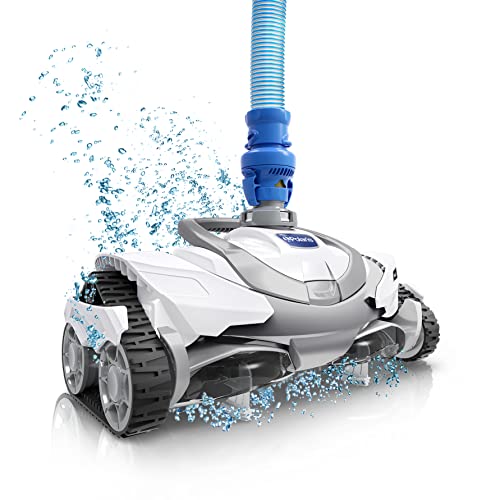
The Polaris MAXX is designed for in-ground pools and features smart navigation and halo technology. It emphasizes energy efficiency and advanced debris removal from multiple surfaces, including floors and walls. The halo design helps manage fine silt and sand, along with larger debris, by maintaining uninterrupted suction and smooth traversal. The MAXX is positioned for households seeking a more adaptive suction-side solution with responsive debris handling and efficient operation across different pool shapes.
Buying Guide: Key Purchase Considerations
- Pool plumbing and line configuration: Determine whether your pool supports a booster-pump-based pressure side cleaner or a return-line-powered unit. Some models require dedicated lines or adapt with retrofit kits, which affects installation cost and complexity.
- Cleaning coverage and debris handling: Consider the pool size, surface type, and typical debris load. Larger intake mouths and multi-venturi jets generally provide stronger suction and faster cleaning cycles, while suction-side models rely more on existing pump power.
- Maintenance and replacement parts: Evaluate the availability of replacement bags, filters, and hoses. Four-wheel designs often offer smoother tracking but may require more parts to service, whereas simpler suction-side units may have fewer moving parts.
- Durability and materials: Look for models built with robust plastics and corrosion-resistant components suitable for chlorine and outdoor exposure. High-quality wheels and seals reduce long-term maintenance needs.
- Ease of setup and compatibility: Check if a booster pump is needed, and whether the cleaner requires specific fittings or adapters for your pool’s wall, floor, and return line configuration.
- Noise and energy considerations: Some models run on dedicated boosters; others rely on the pool’s main circulation pump. Compare energy requirements, pump compatibility, and operational noise for your environment.
- Warranty and support: Review the manufacturer’s warranty terms and access to customer support or parts availability, which can influence long-term satisfaction and cost of ownership.
When selecting a side pressure cleaner, align the choice with your pool’s pipeline setup, typical debris, and routine maintenance preferences. The Polaris options emphasize robust debris handling and versatile line configurations, while Zodiac provides compact suction-focused performance. MAKHOON brings a four-wheel stability angle, and Amptyhub offers a design emphasizing maintenance ease and long cleanup cycles. A careful assessment of the installation requirements and ongoing upkeep will help ensure reliable cleaning performance across seasons.