Best Ways to Remove Rust Stains From Ceramic Tile in Your Home
Rust stains on ceramic tile can be stubborn, but the right cleaner and technique can restore a tile’s original brightness without damaging the surface. Below, you’ll find effective options for tackling rust on ceramic and nearby hard surfaces, plus a helpful buying guide to choose the best product for your kitchen, bathroom, or entryway. The selections focus on proven multi-surface cleaners, gels, and stones-safe formulas that cling to vertical surfaces and reach tough stains with minimal scrubbing.
Summary of chosen products:
| Product | Brand | Best For | Form |
|---|---|---|---|
| Calcium, Lime & Rust Remover (22 oz) | CLR | Bathtubs, ceramic tile, hard water deposits | Spray |
| Whink Rust Stain Remover (32 oz) | Rust-Oleum | White sinks and toilets | Labeled liquid spray |
| Iron OUT Rust Stain Remover Spray Gel (24 oz) | IRON OUT | Showers, tubs, tile, countertops | Gel |
| Calcium, Lime & Rust Remover With Cling (22 oz) | CLR | Vertical and hard-to-reach spots | Spray with cling |
| Rust Remover Marble/Granite/Tile Care (500 g) | Bmkousg | Natural stone surfaces | Stone cleaner |
CLR Calcium, Lime & Rust Remover — 22 oz

This multi-surface cleaner tackles calcium, lime, and rust deposits with a fast-acting formula. It is designed for bathrooms, kitchens, dishwashers, coffee pots, and even outdoor surfaces. On ceramic tile, it can lift rust stains while also cleaning mineral buildup from hard water. Its versatility makes it suitable for quick spot cleaning or larger area treatment, though dwell time on stains may vary by surface porosity.
Features include a broad cleaning scope, rapid rust removal, and the ability to shine fixtures and sinks after treatment. When applying to ceramic tile, avoid excessive saturation on grout lines for best results. Always follow label directions and ensure good ventilation during use.
Rust-Oleum Whink Rust Stain Remover — 32 oz

This heavy-duty iron stain remover is formulated to tackle rust on white sinks and toilets, as well as colorfast fabrics and carpets. It’s designed to work with minimal scrubbing, which can be advantageous for ceramic tile stained by hard water or mineral deposits. The product is low-odor and septic-safe when used as directed, making it a practical option for household use. For tile applications, apply to the stain, let sit briefly, then wipe away to reveal cleaner, brighter grout and glaze.
Consideration: avoid extended dwell times on colored or delicate materials, and test on a small inconspicuous area first. It works well on white ceramic surfaces where staining stands out most clearly, and it’s often chosen for bathroom tile cleanup where rust is persistent.
Iron OUT Rust Stain Remover Spray Gel — 24 oz

Iron OUT offers a heavy-duty stain remover gel that clings to vertical and hard-to-reach surfaces, making it suitable for tiles, showers, tubs, and sinks. The gel formula stays in place to maximize contact time, assisting in dissolving rust stains with minimal scrubbing. It’s marketed as septic-friendly when used as directed and is especially effective on rust-colored stains caused by high iron or hard water. For ceramic tiles, apply to the stain, allow the gel to dwell briefly, then rinse thoroughly.
Pros include strong performance on embedded stains and ease of use with no aggressive scrubbing. A caution is to follow safety directions and perform a patch test on delicate finishes before broad application on polished tile surfaces.
CLR Calcium, Lime & Rust Remover With Cling — 22 oz
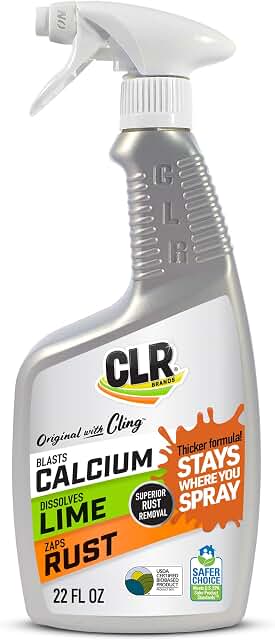
This formula features cling technology to stay where you spray, delivering better cleaning power on tough hard water, calcium, and rust stains. The product is designed for both vertical and hard-to-reach surfaces, which is ideal for tile grout and vertical walls adjacent to showers or sinks. It quickly breaks down residues, offering faster results for spot cleaning or larger sections of tile. As with all cleaners, follow safety directions and ventilate the area during use.
Important note: cling capability helps reduce drips, allowing for more controlled application on tile backsplashes and vertical grout lines. It’s well-suited for bathrooms and kitchens where rust accumulates over time due to mineral-rich water.
Rust Remover Marble/Granite/Tile Care — 500 g

This rust remover is designed for stone and tile surfaces, offering a targeted approach for rust on marble, granite, and ceramic tile. It claims compatibility with multiple stone varieties, aiming to remove oxidation-induced stains without dulling surface gloss. Used correctly, it can help restore the luster of stone and tile while addressing rust deposits. Shake well, apply evenly, wait a few minutes, then scrub gently and rinse. Always follow the product’s specific guidelines for stone surfaces to prevent any adverse effects.
Buying Guide — Key Purchase Considerations
- Surface compatibility: Ceramic tile varies in glaze and porosity. Choose formulas labeled safe for tile and grout, especially for white or light-colored grout that rust stains can darken.
- Application method: Sprays and cling gels perform differently on vertical surfaces and grout lines. For tall shower walls or backsplashes, a cling spray or gel can reduce dripping and improve dwell time.
- Dwell time and contact: Rust stains often require a brief dwell period to penetrate mineral buildup. Longer contact can increase cleaning efficacy but may risk surface damage if not suited for stone or glazed tile.
- Odor and ventilation: Some rust removers emit strong odors. Ensure adequate ventilation, especially in bathrooms, and use protective gloves as recommended.
- Septic safety and environmental impact: If you rely on a septic system or want eco-friendly options, check the label for septic safety and environmental notes.
- Stone and grout safety: When cleaning near grout lines or natural stone, verify that the product won’t etch or dull the finish. Stone-safe formulas are recommended for granite or marble accents adjacent to tile.
- Stain type and severity: For stubborn mineral buildup, combining a rust remover with gentle scrubbing or a second pass with a stone-safe cleaner can improve outcomes without damaging grout.
- Testing: Always perform a patch test on a small, inconspicuous area before treating visible sections of tile or stone.
In summary, selecting the right rust remover for ceramic tile involves balancing surface compatibility, ease of use, and the specific stain type. Multi-surface sprays with cling properties are convenient for general cleaning, while gels excel on vertical surfaces. For stone-adjacent tiles, opt for stone-safe formulas to protect grout and glaze. When used according to directions, these products can restore the brightness of ceramic tile and reduce the appearance of rust stains.