Best Epoxies for Plastic to Metal Bonding
When you need a reliable bond between plastic and metal, choose an epoxy designed for cross‑materials adhesion. The top options below cover quick setup, durable strength, and compatibility with common plastics and metals. This guide highlights who each product is best for and why it fits plastic-to-metal repairs. The buyer types range from DIY hobbyists to automotive and marine projects seeking long‑lasting fixes. Below is a quick comparison to help you pick the right epoxy for your job.
| Product | Best For | Why It Stands Out |
|---|---|---|
| Plastic Bonder by J-B Weld (50139) | Plastic to metal repairs that require a fast, strong bond | 1:1 mix, 15 min set, 3770 psi tensile strength |
| Gorilla 2 Part Epoxy | Clear, visible repairs or gaps | Dries clear; 5 minute set; gap filling |
| Metal Glue Heavy Duty Epoxy (vicpricme) | Metal-to-metal and metal-to-other substrates | 1:1 mix; 24 h cure; high temperature and chemical resistance |
| J-B Weld AutoWeld | Automotive body or interior plastics-to-metal | 1:1 mix; 15 min set; sandable and paintable |
| J-B Weld KwikWeld 6 Minute Set | Quick, sturdy repairs on multiple materials | 6 min set; 4–6 hours cure; 3127 psi |
Plastic Bonder Body Panel Adhesive and Gap Filler
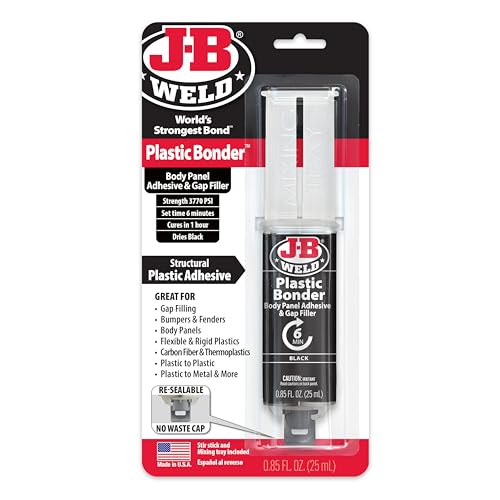
Best for quick, durable bonds between thermoplastics and other materials, including metals. This 1:1 mix system sets in 15 minutes and can be sanded after 30 minutes. It has a high tensile strength of 3770 psi, making it suitable for automotive and consumer repairs where a hard, permanent bond is needed. Choose this if you need a strong, easily sanded joint on plastic panels and metal surfaces. A limitation is its performance on certain flexible plastics without proper surface preparation.
Gorilla 2 Part Epoxy, Clear Epoxy

Best for repairs needing a clear finish and gap filling. The 5-minute set time allows quick realignment, and the clear resin provides a near-invisible bond on metal-to-plastic joints where aesthetics matter. It’s a solid option for visible repairs or for projects where a clean look is important. A potential limitation is the shorter working time for larger builds; mix and apply efficiently for best results.
Metal Glue, Heavy Duty Epoxy (vicpricme)

Best for rugged applications across metal and other substrates. This epoxy is ready to use, with a true 1:1 mix and a 24‑hour cure that yields a dense, steel‑like mass. It’s designed for temperature and chemical resistance, making it suitable for engine bays, marine hardware, and outdoor equipment. A limitation is the longer cure time versus quick-set epoxies; plan repairs accordingly.
J-B Weld AutoWeld

Best for automotive plastics-to-metal repairs requiring a tough, sandable finish. AutoWeld uses a 1:1 mix, sets in 15 minutes, and cures to a strong bond within 30 minutes of finishing. It is suitable for priming and painting after cure. A caution is that surface prep is critical; clean and roughen bonding areas for optimal adhesion.
J-B Weld KwikWeld 6 Minute Set

Best for fast, dependable repairs across metals and plastics. KwikWeld offers a 1:1 mix, with a rapid 6‑minute set and 4–6 hours to cure. It tolerates exposure to moisture and fuels after cure, making it versatile for automotive and household repairs. A limitation is the shorter working time; mix and apply promptly to avoid premature setting.
J-B Weld ClearWeld 5 Minute Set Epoxy

Best for clear, quick repairs on metal, tile, plastics, and glass where a transparent bond is desired. ClearWeld sets in 5 minutes and cures in about an hour, with a tensile strength of 3900 psi. Choose this when aesthetics matter and a visible bond would be undesirable. A caveat is that it may require precise placement before the set begins to ensure alignment.
Buying Guide
What to consider for plastic-to-metal epoxy:
- Material compatibility: Verify the epoxy’s ability to bond plastics with metals, and check if surface preparation (degreasing, abrasion) is needed.
- Setup time and cure: If you need rapid repairs, prioritize quick-set formulations; for larger builds, choose slower, stronger systems.
- Strength and durability: Look for tensile strength in the 3000–4000 psi range for most plastic-to-metal tasks; higher is better for structural repairs.
- Finish and aesthetics: If the repair will be visible, choose clear or color-matched epoxies.
- Water, oil, and heat resistance: Consider environments where the joint will face moisture, oil exposure, or high temperatures.
- Application convenience: Syringe-style formulations can simplify 1:1 mixing and reduce waste.
FAQ
- What is the best epoxy for plastic to metal bonds? Answer: Epoxies formulated for cross-material bonding with good adhesion to both plastics and metals, such as Plastic Bonder or KwikWeld, are strong general options.
- Do all epoxies bond plastic to metal? Answer: Most standard epoxies bond to both materials, but performance varies by plastic type and metal surface treatment; prep surfaces thoroughly.
- How long does it take for an epoxy to cure? Answer: Cure times vary; some set in minutes while others cure over several hours. Follow the manufacturer’s instructions for full strength.
- Can I sand or paint epoxy after curing? Answer: Many epoxies cure hard enough to sand, and some can be painted once fully cured; check product data for compatibility.
- Is clear epoxy suitable for metal-to-plastic bonds? Answer: Clear epoxies are useful when aesthetics matter, but ensure adhesion to both substrates and adequate gap filling.
- What preparation improves bond strength? Answer: Clean, dry surfaces; roughen plastics if possible; remove oils or wax with a degreaser; allow surfaces to dry completely before applying epoxy.