Best Non Plastic Trash Bags for Eco-Friendly Kitchen Waste
Looking for non-plastic trash bags that are better for the environment and still reliable for daily use? This guide highlights top 5 plant-based, compostable, or biodegradable options ideal for common kitchen and household waste. Each bag is chosen for durability, fit with standard tall kitchen bins, and clear environmental benefits. The top picks are best for eco-conscious buyers, households with composting goals, and offices seeking low-plastic alternatives.
Summary at a glance: a quick comparison of the chosen products.
| Product | Size / Capacity | Material Type | Best For |
|---|---|---|---|
| Hippo Sak – Plant Based Tall Kitchen Trash Bags (45 Count) | 13 Gallon | Plant-based (sugar cane); USDA Biobased | |
| Compostic Compostable Trash Bags (50 Count) | 13 Gallon | Plant-based, home compostable | |
| Hippo Sak – Plant Based Tall Kitchen (90 Count) | 13 Gallon | Plant-based; USDA Biobased | |
| HoldOn Compostable Tall Kitchen Drawstring Bags (40 Count) | 13 Gallon | Plant-based, BPA-free, BPI Certified | |
| Matter Compostable 13 Gallon Tall Trash Bags (60 Count) | 13 Gallon | Plant-based biopolymers |
Hippo Sak Plant Based Tall Kitchen Bags (45 Count)

Features: USDA Certified Biobased Product; plant-based materials from sugar cane; renewable resources reduce carbon footprint; more sustainable than bags made from recycled or virgin plastic.
This product is best for buyers who want a clearly plant-based option with a lower fossil-fuel footprint and standard 13-gallon tall kitchen bin compatibility. Ideal for households prioritizing sustainability in daily waste management. A limitation to note is that some users may want higher puncture resistance for very sharp debris; check your trash contents to ensure compatibility with the bag’s strength.
Compostic Compostable Trash Bags (50 Count)
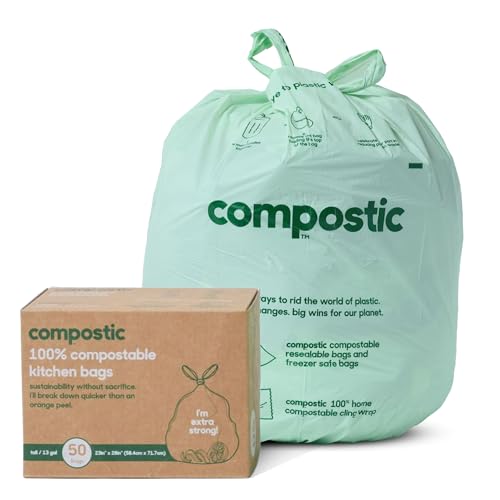
Features: Fits standard 13-gallon bins (23 x 28 inches); extra strong and tear resistant to handle coffee grounds and food scraps; breaks down quickly in home compost within 12–24 weeks with plant-based biopolymers and zero microplastics.
Best for homes pursuing home composting or reducing landfill waste. Choose this if you want a bag that can transition from kitchen disposal to composting. Caution: home compostability depends on local facilities; not all areas have industrial composting capabilities for optimal breakdown.
Hippo Sak Plant Based Tall Kitchen (90 Count)

Features: USDA Certified Biobased Product; plant-based (sugar cane) materials; renewable resources reduce carbon footprint; more sustainable than plastic-based options.
Best for households with higher bag usage or smaller offices needing a longer-lasting supply. Better for buyers who want bulk savings while maintaining plant-based credentials. Limitation: higher count means more storage space is needed and ensure you have bins that handle consistent heavy use.
HoldOn Compostable Tall Kitchen Drawstring Bags (40 Count)

Features: 13-gallon size with triple-ply leak resistance; BPA-free and BPI Certified; plant-based materials suitable for composting and bin liners.
Best for buyers who want leak protection and a sturdy drawstring design in a compostable format. Use caution where local facilities may not accept compostable bags; verify municipal composting capabilities before disposal.
Matter Compostable 13 Gallon Bags (60 Count)
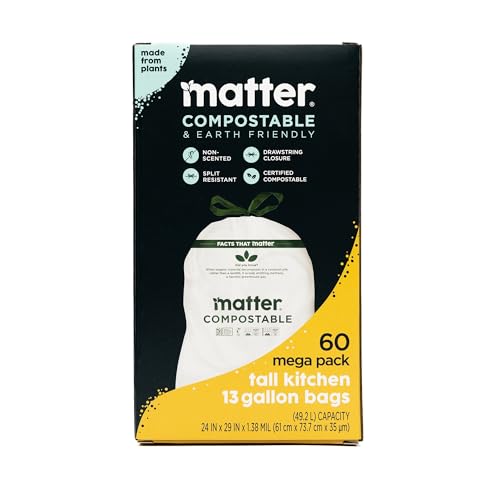
Features: Drawstring closure; heavy-duty strength for wet waste; plant-based renewable biopolymers; designed to break down when disposed of properly rather than remaining as microplastics.
Best for eco-focused households needing reliable drawstring performance and strong closure. Choose this if you want plant-based durability with clear end-of-life benefits. Limitation: like other compostables, effectiveness depends on proper disposal pathways; verify local facilities or home composting feasibility.
Buying Guide: Key Purchase Considerations
- Trash bin compatibility: Ensure the bag size matches your tall 13-gallon bins to prevent slipping or tearing.
- Material and end-of-life: Distinguish between plant-based, compostable, and biodegradable options, and confirm local composting capabilities if you plan to compost bags.
- Strength and puncture resistance: Look for extra-thick gauges or multi-layer designs if you handle sharp or heavy waste.
- Drawstring vs. flap ties: Drawstrings reduce bag slippage and make removal easier; consider this feature for high-usage areas.
- Certifications: Biobased, BPI, OK compost INDUSTRIAL, and ASTM/EN standards help verify environmental claims.
- Storage and bulk needs: Higher-count packs save trips to the store but require more storage space; balance usage rate with storage.
Frequently Asked Questions
- Are compostable bags suitable for all home trash?
– They work well for household waste and composting at facilities that accept compostable bags; check local guidelines for disposal. - What does USDA Biobased mean?
– It indicates the product uses at least a certain percentage of renewable plant-based materials instead of fossil fuels. - Can these bags replace all plastic bags?
– Plant-based and compostable bags reduce fossil fuel use, but some areas may not have composting options; reuse or recycle where appropriate and follow local rules. - Do these bags leak or tear easily?
– Look for thicker gauges and multi-ply designs; some products specify extra-strong or tear-resistant construction. - Are there any safety certifications to look for?
– Certifications like BPI, OK compost INDUSTRIAL, and ASTM/EN standards indicate tested compostability and safety claims.