Best Leather Water and Stain Protectors for Shoes, Bags, and More
The best leather water and stain protector depends on the material and how you plan to apply it. Bickmore Gard-More is the most versatile pick for leather, suede, and other materials; Frye is a non-aerosol option for leather footwear; and Cadillac Shield suits shoppers who want an aerosol for several material types. For leather-care routines that include multiple fabrics, Angelus and Jason Markk offer broad material coverage, with Jason Markk excluding unsealed and vegetable-tanned leather.
| Product | Best For | Notable Detail |
|---|---|---|
| Bickmore Gard-More | Multiple leather types and colors | Breathable, invisible barrier |
| Frye Repellent | Non-aerosol application | Pump spray for leather, suede, and nubuck |
| Cadillac Shield | Broad material coverage | Aerosol mist application |
| Angelus Repellent | Leather and technical fabrics | Includes Gore-Tex in its stated material range |
| Jason Markk Repel | Water-based, non-aerosol care | Not recommended for unsealed or vegetable-tanned leather |
Bickmore Gard-More Water And Stain Repellent
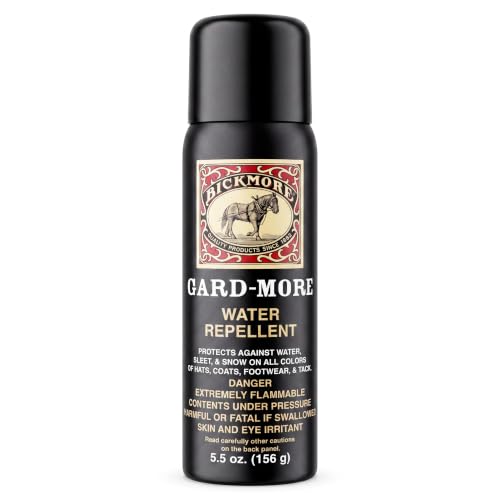
Bickmore Gard-More is best for shoppers looking for one protector for several leather and fabric items. Its listed suitable materials include leather, suede, nubuck, fabric, and felt, and it is described as safe for all colors. The brand also lists uses such as boots, shoes, hats, jackets, gloves, furniture, and leather accessories.
The product is described as creating a breathable, invisible barrier rather than sealing material pores. Its features state that it is intended to help avoid yellowing or stiffening while protecting against water and stains. That combination makes it a useful choice when preserving the feel and appearance of varied items is a priority.
- Best for: Households protecting several kinds of leather, suede, or felt goods.
- Why it was selected: Its stated material and item range is broader than a footwear-only protector.
- Limitation: The supplied product details do not give specific application or drying instructions, so follow the label before use.
Frye Leather Water And Stain Repellent

Frye’s repellent is best for buyers who prefer a non-aerosol pump spray for leather, suede, and nubuck footwear or accessories. The listed features identify it as official FRYE protection and say that it helps repel water, salt, and everyday stains while allowing the material to breathe naturally.
The product is presented as an invisible shield that leaves no discoloration or residue. Its pump format is also described as avoiding propellants and harsh fumes, which may suit shoppers who prefer not to use an aerosol can. It is a focused choice for common footwear materials rather than an all-purpose treatment for every textile.
- Best for: FRYE footwear and accessories made from leather, suede, or nubuck, and shoppers seeking non-aerosol application.
- Why it was selected: It specifically addresses water, salt, and everyday stains on the listed leather materials.
- Limitation: The supplied features do not list a wider range of materials such as canvas or nylon.
Cadillac Shield Leather And Fabric Protector

Cadillac Shield is best for buyers who want an aerosol protector listed for leather and a range of other shoe materials. Its stated coverage includes suede, nubuck, fabric, nylon, polyester, canvas, and synthetics. The product features describe protection against water, rain, snow, and common stains such as dirt, grass, oil, salt, coffee, and juice.
The aerosol applicator is designed to distribute a fine mist across footwear and accessories. The product instructions say to hold the can 6 to 9 inches from the item for application. This makes it a practical option when a spray format and broad material list matter more than a pump bottle.
- Best for: People treating shoes or accessories made from different materials, including leather, fabric, and synthetics.
- Why it was selected: Its listed material coverage and examples of stain types make its intended use easy to assess.
- Limitation: It uses an aerosol applicator; choose a non-aerosol option if you specifically want a pump spray.
Angelus Water And Stain Repellent Spray

Angelus is best for buyers who want a water and stain protector listed for leather, suede, and Gore-Tex, along with other materials. Its features describe an invisible protective layer intended to help repel water and stains. The 6-ounce aerosol can is designed for quick, even application.
This product can be considered when footwear or accessories combine leather with materials that need a different care approach. Its stated material range is useful to check against the item’s care label before spraying. The listing does not provide detailed directions for distance, number of coats, or drying time, so use the package directions for those details.
- Best for: Buyers seeking one listed spray for leather, suede, and Gore-Tex items.
- Why it was selected: It combines leather coverage with a stated technical-fabric use and a convenient aerosol format.
- Limitation: It is an aerosol product, and the supplied details do not specify application or re-treatment intervals.
Jason Markk Repel Non-Aerosol Spray

Jason Markk Repel is best for buyers who want a water-based, non-aerosol spray for footwear, bags, hats, jackets, and other listed items. Its material list includes leather, suede, nubuck, canvas, cotton, nylon, knit, woven fabric, and mesh. The brand says the formula does not contain PFAS, PFOA, or PFCs.
The application directions call for a clean, dry item, an upright bottle held 6 to 8 inches away, even coverage, and no oversaturation. The item should dry completely before exposure to liquid or dirt. These instructions make it especially useful for buyers who want specific guidance on applying a pump-style protector.
- Best for: Shoppers looking for a non-aerosol, water-based option across several footwear and apparel materials.
- Why it was selected: It provides broad material coverage and clear application directions.
- Limitation: The brand does not recommend it for unsealed leather or vegetable-tanned leather.
Buying Guide: How To Choose A Leather Water And Stain Protector
Which materials do you need to protect?
Start with the item’s material and care label. “Leather” can refer to different finishes and constructions, and not every spray is suitable for every type. Suede and nubuck have a different surface from smooth finished leather, while canvas, mesh, and synthetic materials may have their own care needs. Check that the product names the specific material before applying it.
For multiple material types, compare the label’s coverage rather than assuming a broad-use spray works on everything. Gard-More lists leather, suede, nubuck, fabric, and felt. Cadillac Shield lists leather, suede, nubuck, fabric, nylon, polyester, canvas, and synthetics. Jason Markk includes mesh and knit but excludes unsealed and vegetable-tanned leather.
Do you prefer aerosol or pump application?
Aerosol sprays can be convenient for distributing a fine mist over footwear, as the Cadillac Shield and Angelus listings describe. Pump sprays avoid an aerosol format: Frye and Jason Markk are non-aerosol options. The right format depends on your preferences and the item’s setting. Follow the product label for ventilation and application directions regardless of format.
How important is preserving the material’s appearance and feel?
Look for product statements about breathability, residue, discoloration, and changes to texture. Gard-More describes an invisible, breathable barrier and says it is designed to avoid yellowing or stiffening. Frye describes its shield as invisible and residue-free. These are product claims, not a guarantee that every item will respond identically.
Before treating a visible area, check the care instructions and test the product in a small, inconspicuous spot if the label recommends it. Allow the test area to dry and inspect it for a change in color or texture. This precaution is particularly important for delicate, vintage, or unusually finished leather.
Are you protecting footwear or other leather goods?
Some products are positioned primarily for shoes, while others list broader uses. Gard-More names furniture, hats, jackets, gloves, saddles, and tack as possible applications. Jason Markk lists hats, bags, jackets, and jeans in addition to footwear. Confirm that the item type and material are included in the product directions before use.
Does a protector replace leather conditioner?
No. A water and stain repellent is intended to help create a barrier against moisture or stains. A conditioner is used to moisturize or soften leather, according to the conditioner’s directions. These are different product roles. Leather Honey, for example, is described as a conditioner and water-repellent formula, but its supplied features say it is not for suede, faux leather, or vinyl. Do not treat a conditioner and a spray protector as interchangeable.
How should you apply a protector?
Begin with the product’s label, since directions vary. For Jason Markk Repel, the supplied instructions say to use a clean, dry item, hold the bottle upright 6 to 8 inches away, spray evenly without oversaturating, and let the material dry completely before exposing it to liquid or dirt. Cadillac Shield’s instructions say to hold its aerosol 6 to 9 inches from the item. Do not transfer one product’s instructions to another spray.
Frequently Asked Questions
Can leather water and stain protector be used on suede?
Some protectors in this guide list suede as a suitable material, including Gard-More, Frye, Cadillac Shield, Angelus, and Jason Markk. Always verify the product label and the suede item’s care instructions before applying.
Will a leather protector make shoes completely waterproof?
A protector is intended to help repel water, but the supplied product details do not establish that treated footwear becomes completely waterproof. For example, Crep Protect’s listing says mesh remains permeable. Do not rely on a spray to make an item waterproof unless its manufacturer explicitly states that use.
Can I use a protector on every color of leather?
Some listings, including Gard-More and Frye, state that their products are suitable for all colors or safe on all colors. That does not guarantee a result on every finish. Check the label and test an inconspicuous area when appropriate.
How often should I reapply a leather protector?
Reapplication intervals depend on the product and use conditions. The supplied details do not give a general schedule for most of these sprays. Follow the specific product label rather than assuming that one treatment lasts a set amount of time.
Can I spray protector on unsealed leather?
Check the product’s material restrictions first. Jason Markk specifically says its Repel spray is not recommended for unsealed or vegetable-tanned leather. For other products, do not assume suitability unless the label confirms it.