Best Hazmat Suit for Cleaning: Top Disposable Coveralls for Safe Work
The best hazmat suit for cleaning depends on your exposure risk and the duration of wear. For general cleaning in dusty or light-liquid environments, disposable coveralls with full-body protection and breathable materials are ideal. This guide highlights five top options, noting who each is best for and potential limitations. The selections emphasize full-body coverage, comfort, and practical features for lab, painting, and industrial tasks.
Buyer’s quick table: Selected products at a glance
| Product | Best For | Key Benefit |
|---|---|---|
| Andes Hazmat Suits (1, Large) | General labs and paint work | Attached hood and boots for full coverage |
| TICONN Hazmat Suit Disposable Coveralls | Quick don/doff and active worksites | Front zipper and breathable PP+PE material |
| Medtecs Hazmat Suits Disposable | Longer wear with enhanced breathability | 360-degree protection with elastic fit |
| YIBER Hazmat Suit Disposable Coverall | Messy dirty jobs in workshops | Heavy-duty, full-body coverage in multiple sizes |
| Andes Safety Hazmat Suit (XXL) | Heavy-duty painting or industrial use | 4-thread overlock seam strength and anti-static |
Andes Hazmat Suits With Attached Boots

Inherent protection with microporous PE film provides robust coverage and durability. The suit includes an attached hood and built-in boots, with elastic wrists for full-body coverage. Anti-static treatment helps reduce static buildup, lowering ignition risk in flammable environments. This option is best for workers needing all-in-one protection in labs, paint shops, or cleanup tasks where moisture and chemicals are moderate.
Who it’s best for: Professionals needing reliable, full-coverage protection without separate footwear. Limitations: Front-zip design may be less convenient for rapid removal in some workflows.
Key features: Microporous PE film, attached hood, built-in boots, elastic wrists, anti-static treatment.
TICONN Hazmat Suit Disposable Coveralls

Full-body protection with a hood provides coverage against dust, liquids, and particles. The front zipper allows quick donning and doffing, making it practical for fast-paced work environments. The PP+PE material is lightweight, breathable, and water-repellent, offering comfort during extended wear. Superior elasticity in cuffs, waist, and hood helps seal out contaminants.
Who it’s best for: Teams needing easy, rapid changes and reliable protection in labs or painting tasks. Limitation: Disposable nature may add up in high-volume daily use.
Key features: Hooded full-body suit, front zipper, breathable and water-repellent material, elastic cuffs/waist/hood.
Medtecs Hazmat Suits Disposable
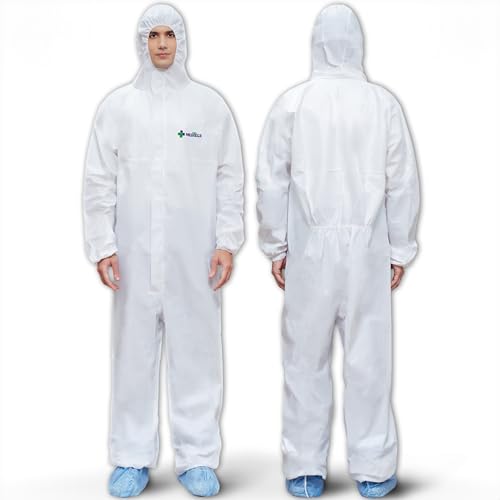
This 360-degree protective coverall uses elasticated hood, wrists, and ankles with a front zipper for easy changes. Laminated PPSB with PE film enhances durability and breathability, suitable for workers who require extended wear without overheating. The design supports a comfortable range of motion, which is helpful for continuous cleaning or painting tasks.
Who it’s best for: Users needing durable protection with flexible movement for longer shifts. Caution: Availability of sizes may vary; check for your height and reach.
Key features: Elastic hood/wrists/ankles, front zipper, PPSB laminated with PE film, breathable and durable.
YIBER Hazmat Suit Disposable Coverall

Heavy-duty, full-body protection against dirt, dust, and paint. The one-piece white coverall with a hood is designed for both indoor and outdoor use and is available in multiple sizes. It offers full-body protection from head to toe with breathable material for all-day comfort.
Who it’s best for: Workers facing messy, high-dirt environments and those needing a broad size range. Limitation: Described as heavy-duty for general shop environments; not explicitly rated for toxic or highly hazardous substances.
Key features: Full-body hooded protection, breathable multilayer fabric, wide size range.
Andes Safety Hazmat Suit XX-Large

Inherent protection via microporous PE film with enhanced seam strength (4-thread overlock). Anti-static fabric reduces static buildup, lowering ignition risk around flammable substances. Suitable for tasks involving light liquids, dust, and painting, with coverage designed to minimize exposure.
Who it’s best for: Heavy-duty painting or industrial cleanups where seam integrity matters. Caution: Larger sizes may feel bulky for confined spaces.
Key features: Microporous PE film, anti-static fabric, strong seams, full-body coverage.
Buying Guide
What level of protection do you need?
Assess exposure: dust, light liquids, solvents, or static risk. For routine cleaning with non-hazardous dust, standard disposable coveralls with full body coverage are sufficient. For solvents or splash risks, choose garments with splash protection and sealed seams.
Which features matter most?
- Full-body coverage: Hood, cuffs, and boots reduce exposure.
- Breathability: Microporous layers balance protection with comfort for longer wear.
- Seam strength: Overlock or reinforced seams reduce tears during movement.
- Anti-static: Important around flammable materials or spark-prone environments.
- Donning and doffing: Front zippers enable quick changes; consider ease for large teams.
How to size and fit?
Size ranges vary (from S to 4XL or more). When possible, verify height, torso length, and arm reach. Elastic cuffs, waist, and ankles help with fit and seal integrity. If in doubt between sizes, opting for the next size provides easier movement without compromising coverage.
Care and disposal considerations
Disposable coveralls reduce cross-contamination risk but create waste. For reusable or re-wear options, ensure proper cleaning and drying guidelines are followed. Check that your worksite waste management permits proper disposal of contaminated PPE.
Choosing by environment
- Labs and painting shops: Prioritize full-body coverage, anti-static features, and ease of changing.
- Industrial cleaning: Look for stronger seams and durable materials.
- Brief or intermittent jobs: Lightweight, breathable suits with quick-donning designs are ideal.
Frequently Asked Questions
- What is a hazmat suit best used for in cleaning?
- Do all hazmat suits require booties or built-in boots?
- Is anti-static treatment essential for cleaning tasks?
- How do I choose between a front-zip and a zippered entrance?
- Can I reuse disposable hazmat suits?
- What size should I order for a comfortable fit?
A hazmat suit provides a barrier against dirt, dust, light liquids, and certain chemicals, reducing skin exposure and protecting clothing during cleaning tasks.
Not always. Some models include attached boots or booties, while others require separate footwear. Built-in options offer complete coverage with fewer components to manage.
Anti-static features help reduce the risk of static sparks around flammable substances, which can be important in certain environments like paint booths or chemical labs.
Front zippers enable quicker changes and easier removal, particularly in busy workflows. Some users prefer back-zip designs for a more uniform seal, but they can be slower to don and doff.
Most disposable suits are designed for single use. Reuse may compromise protection and is generally not recommended unless the product is explicitly rated for multiple uses and properly cleaned according to guidelines.
Always refer to the manufacturer’s size chart. If between sizes, choose the larger size to ensure freedom of movement and proper seal at the wrists, ankles, and hood.