Best Hand Soaps for Sensitive Skin: Gentle, Fragrance-Free Options That Work
If you have sensitive or reactive skin, you need hand soap that cleans well without drying or irritating. This guide highlights five trusted options that emphasize moisture, minimal irritants, and skin-supporting ingredients. The best picks are fragrance-free or lightly scented formulas, with moisturizers to protect skin during frequent hand washing. Each product is evaluated for who it’s best for and why it’s a strong choice for sensitive skin types.
| Product | Best For | Key Benefit |
|---|---|---|
| ECZEMA HONEY Gentle Foaming Hand Soap | Dry, irritated skin; eczema flare-ups | Organic honey, coconut and hemp oils; non-toxic formula |
| ATTITUDE Hand Soap for Sensitive Skin | Very sensitive skin; families | 99% natural origin ingredients; EWG Verified; oat extract for soothing foam |
| Ginger Lily Farms All-Purpose Hand Soap | Fragrance-free, plant-based option | Fragrance-free, vegan, cruelty-free; non-irritating formula |
| Amazon Basics Gentle & Mild Clear Liquid Hand Soap | Budget-conscious, general use | Triclosan-free; dermatologist-tested; pH balanced |
| Dove Advanced Care Deep Moisture Hand Wash | Moisture-focused care | Moisture Boost Complex; nourishes skin 10 layers deep |
ECZEMA HONEY Gentle Foaming Hand Soap

Best for: Dry, irritated skin and eczema-prone hands. The formula uses organic honey along with coconut, palm, hemp, and olive oils to nourish while cleansing. It’s a gentle option that helps hydrate during winter dryness or flare-ups.
Why selected: Hydration-focused ingredients aim to reduce friction and discomfort associated with dry hands. The soap emphasizes natural components and non-toxic formulation, making it suitable for sensitive users.
Caution: Contains oils that could leave a slight residue for some users; test a small area first if you have very sensitive skin.
ATTITUDE Hand Soap for Sensitive Skin

Best for: Families seeking a clean, gentle option with minimal synthetic additives. Attitude’s soap uses 99% natural-origin ingredients and is EWG Verified, focusing on skin-friendly cleansing.
Why selected: The combination of oat extract for soothing properties and a rich foam helps wash without harshness. It avoids SLES, petrolatum, mineral oil, and artificial colors to reduce irritant exposure.
Caution: Some users may prefer a scented option; this is fragrance-free, which may be less appealing to those who enjoy a light scent.
Ginger Lily Farms All-Purpose Hand Soap
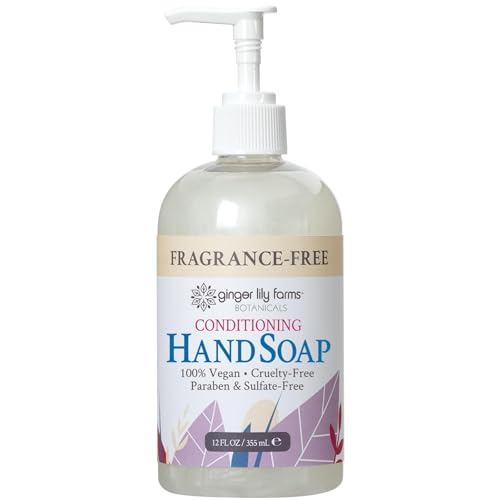
Best for: Those who want a fragrance-free, plant-based option without harsh additives. This soap emphasizes a gentle cleanse that supports skin hydration.
Why selected: 100% vegan and cruelty-free with a focus on natural ingredients that are typically well-tolerated by sensitive skin. The fragrance-free formula reduces irritant exposure while maintaining cleansing performance.
Caution: Labeled fragrance-free but check ingredient lists if you have specific sensitivities to natural extracts or oils.
Amazon Basics Gentle & Mild Clear Liquid Hand Soap

Best for: Everyday use where a simple, non-irritating cleanser is needed. This soap is designed to be gentle on skin while washing away germs.
Why selected: Dermatologist-tested and free from triclosan, phthalates, parabens, and formaldehyde donors. The pH-balanced formula supports skin’s natural moisture barrier.
Caution: It is a basic cleansing option; users seeking extra moisturization may prefer formulas with added emollients.
Dove Advanced Care Deep Moisture Hand Wash

Best for: Hands that require intensive moisture after washing. This formula targets 10-layer nourishment for lasting softness.
Why selected: The MOISTURE BOOST 5X COMPLEX blends moisturizers and skin-natural nutrients with rapid germ removal, making it a strong choice for daily care on dry or sensitive skin types.
Caution: Some users may prefer fragrance-free options; this product has a gentle scent profile, so it’s important to verify scent sensitivity if needed.
Buying Guide: Key Considerations For Sensitive Skin
- Fragrance and irritants: Look for fragrance-free or hypoallergenic formulas to minimize irritants. Avoid products with SLES, phthalates, parabens, or formaldehyde donors if you have sensitivity.
- Moisturizing ingredients: Choose soaps with added moisturizers like glycerin, oils, ceramides, or oat extract to support the skin’s moisture barrier between washes.
- pH balance: A pH-balanced soap helps preserve the skin’s natural acidity, reducing dryness and irritation over time.
- Germ removal vs. skin health: While thorough cleansing is important, prioritize formulas that remove germs without stripping natural oils. Hydrating cleaners typically perform well on delicate skin.
- Fragrance-free vs. lightly scented: If you are prone to irritation, fragrance-free options are generally safer. If you prefer a scent, look for milder, skin-friendly fragrances and test first.
- Product claims to watch: “Dermatologist-tested,” “EWG Verified,” and “natural origin ingredients” are useful signals, but always review ingredient lists for personal sensitivities.
FAQ
- What defines a soap as “fragrance-free”?
- Is a foaming soap better for sensitive skin?
- Should I avoid antibacterial soaps?
- How do I test a new hand soap for sensitivity?
- What ingredients are good for eczema-prone hands?
Fragrance-free products do not include added fragrance ingredients. Some may contain natural scent components from essential oils, so check the ingredient list for any potential irritants.
Foaming soaps can be gentler for some users, as they often require less repeated rubbing. However, the key is the formula’s moisturizing ingredients and absence of irritants.
Antibacterial agents aren’t always necessary for everyday use and can be drying. For sensitive skin, choose milder cleansers with adequate germ-fighting ability and moisturizers.
Patch-test a small amount on the inner arm for 24–48 hours to check for redness, itching, or irritation before widespread use.
Look for honey, oats, ceramides, glycerin, and natural oils. Fragrance-free formulas reduce exposure to potential irritants that trigger eczema.