Best Commercial Kitchen Floor Cleaner Guide for Busy Kitchens
Answering the typical buyer question, this guide highlights the best commercial kitchen floor cleaners for professional use. It focuses on products suited for heavy grease, high-traffic areas, and a variety of floor types. Ideal buyers include restaurant managers, hotel kitchens, catering facilities, and food-service operators seeking reliable, no-rinse or low-residue options. The table below summarizes five top contenders to help you compare at a glance.
| Product | Brand | Type | Best For | Key Benefit |
|---|---|---|---|---|
| Zep Neutral pH Industrial Floor Cleaner (1 gal) | Zep | Neutral pH floor cleaner | Varied floor types including marble, vinyl, stone | Cleans and shines without stripping coatings |
| Restaurant Bio-Deodorizing Floor Cleaner | Black Diamond Stoneworks | Enzymatic degreaser and deodorizer | High-grease kitchens; odor control | Deep cleaning with odor removal |
| SMP13005 Simple Green Industrial Cleaner and Degreaser | Simple Green | Industrial cleaner and degreaser | Heavy dirt and grime on multiple surfaces | EPA Safer Choice; versatile cleaning |
| Zep All-Purpose Cleaner and Degreaser (1 gal) | Zep | All-purpose degreaser | Countertops, floors, walls, equipment | Heavy-duty, versatile cleaning for multiple surfaces |
| Mr. Clean PRO All Purpose Floor Cleaner (1 gal, 3-pack) | P&G PROFESSIONAL | All-purpose floor cleaner | Finished floors in high-traffic areas | Removes more soils; leaves shine without dulling residue |
The following sections dive into each product, highlighting suitability, pros, and practical cautions for a commercial kitchen setting. Each section uses clear, decision-focused language to help buyers compare quickly.
Zep Neutral pH Industrial Floor Cleaner

Best for: Facilities with varied floor types, including marble and stone. This cleaner maintains polish while cleaning without stripping protective coatings, and it can restore shine without rinsing. It’s suitable for VCT, marble, granite, and other sealed surfaces. Sheen is preserved, which helps reduce re-coating costs over time.
Why selected: Its neutral pH formula reduces risk to sensitive floor finishes while delivering consistent cleaning power. The absence of rinsing simplifies workflow in busy kitchens. However, avoid overuse on untreated stone where a seal is missing, as noted by surface care guidelines.
Caution: Not every grout or seal will react identically; test on a small area before full deployment. Use according to label directions to prevent residue buildup on dark floors.
Restaurant Bio-Deodorizing Floor Cleaner
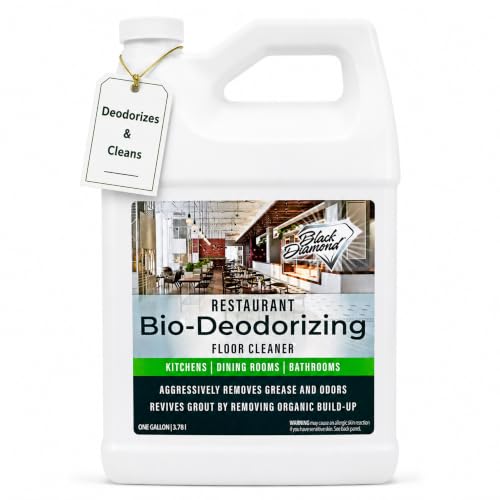
Best for: High-traffic eateries with frequent odor concerns. This enzymatic degreaser removes grease and odors while restoring grout buildup, making it a strong choice for tile and laminate floors in kitchens and dining areas.
Why selected: The fresh-clean scent helps improve guest impressions, and enzymatic action targets embedded grease rather than just surface grime. It suits kitchens, bathrooms, and entryways where lingering smells are a risk.
Caution: Odor control is strongest with consistent use; sporadic application may yield less noticeable benefits. Avoid using on unfinished wood without testing first.
SMP13005 Simple Green Industrial Cleaner

Best for: Environments facing heavy grease and residue on floor, counters, and equipment. This cleaner also handles walls and machinery, making it a versatile choice in a mixed-use kitchen.
Why selected: It’s EPA Safer Choice, supporting broader safety and regulatory considerations in food-service settings. The formulation is powerful yet adaptable for regular maintenance on high-traffic floors.
Caution: For some natural stone floors, ensure compatibility with sealants or coatings. Perform a small test area before full-scale use to confirm finish integrity.
Zep All-Purpose Cleaner and Degreaser

Best for: Kitchens needing a robust, all-surface cleaner for floors, countertops, appliances, and walls. It supports heavy grime on tile and stainless steel surfaces commonly found in commercial kitchens.
Why selected: A heavy-duty, professional-grade formula can tackle stubborn dirt across multiple surfaces, reducing the need to buy separate cleaners. It also supports a polished appearance on diverse materials.
Caution: Use as directed on painted wood trim or delicate finishes to avoid dulling or residue. Test on a small area if unsure about compatibility with particular sealants.
Mr. Clean PRO All Purpose Floor Cleaner

Best for: Finished floors in high-traffic commercial kitchens where quick cleaning and shine are priorities. It helps dissolve ground-in dirt and leaves floors with a clean, polished look.
Why selected: It offers a balance of soil removal and residue control, supporting longer time between deep cleans. It’s a straightforward option for teams seeking reliable, no-fuss maintenance cleaning.
Caution: Some finishes may require lighter dilution to prevent residue buildup. Always follow the dilution instructions for optimal results.
Buying Guide: Key Purchase Considerations
What floor types will you clean?
Consider whether your facility has vinyl, ceramic, marble, granite, sealed concrete, or wood floors. Neutral pH cleaners are gentler on coatings, while heavy-duty degreasers are better for grout and greasy zones. Always verify surface compatibility before broad application.
Do you need a no-rinse or easy-rinse formula?
No-rinse formulas save time in busy kitchens but may carry residue if not used as directed. Rinsing requirements depend on the floor type, sealant, and traffic patterns.
Is odor control a priority?
Enzymatic cleaners can tackle embedded grease and odors, which helps in dining and entry areas. If odor is a major concern, consider cleaners marketed for deodorizing performance.
Regulatory and safety considerations
Look for products with EPA Safer Choice or NSF registrations when applicable. This supports compliance in food-service environments and helps ensure safer handling by staff.
Performance versus cost
Evaluate dilution ratios, required contact times, and surface versatility. A multi-surface cleaner may reduce stock, but a targeted degreaser could deliver better results in greasy zones.
Practical usage tips
- Test a small area first on new floors or coatings.
- Follow recommended dwell times for grease-laden floors.
- Keep slip-resistance and ventilation in mind during use.
FAQ
- What is the advantage of a neutral pH floor cleaner?
Neutral pH cleaners minimize risk to sealants and finishes while still removing dirt and grime.
- Can these cleaners be used on marble or natural stone?
Yes, some are suitable for marble and natural stone, but always verify surface compatibility and perform a spot test first.
- Do I need to rinse after using these cleaners?
Some are no-rinse formulas; others require rinsing depending on the surface and product. Check label directions.
- Which product is best for odor control?
Enzymatic or deodorizing floor cleaners are designed to target odors associated with grease and kitchen areas.
- Are these products safe for food-service environments?
Many are designed for such settings and may carry safety registrations; confirm compliance for your facility.
- How do I choose between a dedicated degreaser and a general cleaner?
Choose a degreaser for heavy grease zones; a general cleaner can handle routine maintenance across surfaces.