Best Cleaning Supplies for Restaurants: Heavy-Duty Degreasers and Sanitation
For restaurant professionals, the right cleaners deliver fast grease removal, surface protection, and reliable sanitization without disrupting service. This guide highlights five top products that address common restaurant cleaning tasks—from stubborn kitchen grease to floor hygiene and food-contact surface safety. Each item is chosen for relevance to commercial kitchens and foodservice operations, with notes on who should choose it and potential limitations to consider.
Buyer snapshot table
| Product | Best For | Key Benefit | Limitations |
|---|---|---|---|
| Zep All-Purpose Cleaner and Degreaser | Heavy-duty kitchens, back-of-house surfaces | Cuts through grease on counters, appliances, walls | Can be strong on delicate finishes |
| Dawn PRO Kitchen Surface Degreaser | High-grease kitchens, daily heavy cleaning | 2x faster grease removal, less scrubbing | Food-contact surfaces require rinsing |
| Restaurant Bio-Deodorizing Floor Cleaner | Tile, laminate, and other hard flooring | Enzymatic degreasing and odor control | Concentrated formula requires proper dilution |
| PURELL Foodservice Surface Sanitizer | Food-contact and non-porous surfaces | Kills 99.9% of viruses and bacteria quickly | Rinse not always required depending on usage |
| S&T Microfiber Cleaning Cloths | Daily wiping, glass, and surfaces | Lint-free, versatile cleaning rags | Single-use alternatives may be needed for some tasks |
Zep All-Purpose Cleaner And Degreaser

A versatile heavy-duty cleaner designed to tackle countertops, appliances, cabinets, painted doors, and trim. Its professional-grade formula is effective against grease, grime, and dirt on kitchen walls, bathrooms, floors, and other surfaces. Best for those needing a robust degreasing solution across multiple hard surfaces in a commercial setting.
Best for: kitchens needing a single cleaner for multiple surface types and stubborn grime. Choose this if you manage diverse surfaces and require strong degreasing power. Limitations: avoid overly delicate finishes without a spot test.
Dawn PRO Kitchen Surface Degreaser

Bulk cleaning spray for oil and grease buildup in commercial kitchens. It cuts tough grease 2X faster and reduces scrubbing by 50% compared with leading professional degreasers. Can be used on food-contact surfaces when followed by rinsing with water.
Best for: high-grease operations where reduction in scrubbing time improves throughput. Better for: frequent degreasing tasks on hard surfaces like grills, hoods, and counters. Caution: ensure proper rinsing on food-contact surfaces to meet hygiene standards.
Restaurant Bio-Deodorizing Floor Cleaner

Heavy-duty floor cleaner that uses enzymatic action to remove grease and odors from mopped floors. It can deodorize as it cleans and revives grout by breaking up build-up. Suitable for tile, laminate, hardwood, and similar surfaces in busy dining rooms and back-of-house corridors.
Best for: maintaining clean, odor-free floors in high-traffic areas. Better for: treating common odor sources without masking them with fragrances. Limitation: dilution and proper application are essential for optimal results.
PURELL Foodservice Surface Sanitizer Spray
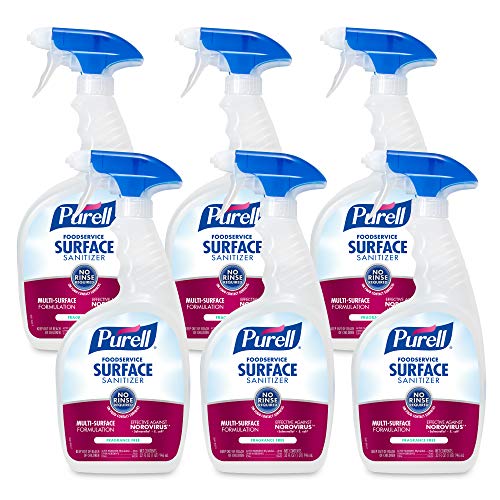
Fragrance-free sanitizer spray for foodservice surfaces. One-step sanitizer kills 99.9% of viruses and bacteria, including norovirus, E. coli, Salmonella in 30 seconds, and COVID-19 in 10 seconds. Compatible with most hard and soft surfaces and can be used on food-contact surfaces with no rinse required in some applications.
Best for: quick sanitization of prep tables, cutting boards, and high-touch surfaces. Choose this if you need a fragrance-free option with fast disinfection. Caution: follow label guidance for surfaces that require rinsing or post-application drying in food prep zones.
S&T Microfiber Cleaning Cloths

Bulk microfiber towels for home and professional use. Ultra-soft, lint-free, and effective on wood, glass, tile, and multiple surfaces. Good for daily wiping, glass cleaning, and quick surface refreshers in a restaurant setting.
Best for: daily wipe-downs and glass surfaces without leaving lint. Better for: smaller, frequent tasks where disposable wipes aren’t desired. Limitation: may need to pair with non-scratch detergents for heavy grease tasks.
Buying Guide: Key Considerations For Restaurant Cleaning Supplies
What surfaces need compatible cleaners?
Restaurants have a mix of stainless steel, tile, porcelain, wood, and painted surfaces. Choose products labeled safe for such materials, or test on an inconspicuous area first.
How important is fast-action sanitizing?
Food safety relies on quick disinfection. Look for sanitizers with fast kill claims on common pathogens and explicit guidance for food-contact surfaces.
How should I manage floor care?
Floor cleaners should tackle grease while protecting slip resistance. Enzymatic cleaners can help with odors and grout buildup but require proper dilution and rinsing where needed.
Is fragrance an issue in kitchens?
Fragrance-free or low-fragrance options reduce potential flavor interference and sensitivities among staff and guests. Consider these for prep areas and dining zones.
What about tools and wipers?
High-absorbency microfiber cloths and sturdy scrubbers improve productivity. Pair durable pads and mops with compatible cleaners for efficient cleaning cycles.
Operational tips for selecting products
- Match product strength with task intensity: heavy degreasers for grills, gentler cleaners for surfaces needing frequent contact.
- Check dilution requirements and compatibility with floor finishes and coatings.
- Ensure that sanitizers used on food-contact surfaces follow rinse or no-rinse guidelines per local health codes.
Practical comparison points
- Degreasing power: Zep vs Dawn PRO—assess grease levels and surface types in your kitchen.
- Floor cleaning: Bio-Deodorizing cleaner vs traditional mops—consider odor control and grout reviving effects.
- Sanitization: Fragrance-free option for sensitive environments and quick-turnaround service areas.
- Rinse requirements: Some cleaners require rinsing after use; plan workflow to avoid downtime.
Maintenance and storage considerations
Store chemicals in labeled containers away from food zones. Keep dilution ratios clear for staff and ensure easy access to microfiber towels and scrubbers for efficient workflows.
Frequently Asked Questions
- Which cleaner is best for a busy kitchen with heavy grease? A heavy-duty degreaser like Zep or Dawn PRO is typically most effective for kitchen grease on multiple surfaces.
- Do I need to rinse after using sanitizers on food-contact surfaces? Yes, if the product instructions specify rinsing for surfaces that contact food. Some formulations are no-rinse when used as directed.
- Are microfiber cloths safe for stainless steel and glass? Yes, microfiber cloths are generally safe and lint-free for stainless steel, glass, and non-porous surfaces when used with appropriate cleaners.
- Can enzymatic floor cleaners replace regular mopping? Enzymatic cleaners help with odor and buildup; they can supplement but may not replace standard mopping routines, depending on facility needs.
- What should be considered when choosing a floor cleaner for grout? Look for enzymatic or degreasing formulas that target grease buildup and grout lines, and ensure proper dilution and rinsing.
- Is fragrance-free important in a restaurant setting? Fragrance-free options reduce potential flavor interference and staff sensitivity, especially in food prep areas and dining rooms.