Best Adhesive Removers for Glass Surfaces You Can Trust
Yes—these adhesive removers are effective on glass without damaging the surface. This guide highlights top picks that work well on glass and other hard surfaces, helping you remove stickers, labels, tape residue, and gum with minimal effort. The top picks below are suited for household use, car detailing, and workshop projects. Read on to compare formulas, safety notes, and ideal use cases.
| Product | ||
|---|---|---|
| Goo Gone Spray Adhesive Remover Gel | Homes with varied surfaces | Safe on glass, wood, metals |
| Goo Gone Original Liquid | General household cleanup | Surface-safe; citrus scent |
| Perco Glue Off Adhesive Remover | Automotive/metal surfaces | Not for delicate or porous surfaces |
| 3M Adhesive Remover | Post-collision cleanup | Low VOC; leaves no residue |
| Tidybond Adhesive Remover Spray | Wide surfaces; quick cleanup | Safe for glass, metal, plastic |
Goo Gone Spray Adhesive Remover Gel

The Goo Gone Adhesive Remover Spray Gel clings to surfaces and dissolves tough sticky messes, including glue, stickers, tape residue, gum, grease, wax, and decals. The citrus-based formula is designed to be safe on a variety of hard surfaces, including glass, finished wood, sealed stone, metal, plastics, painted surfaces, ceramic, and porcelain. Best for kitchens, bathrooms, garages, classrooms, and cars where glass surfaces are common. A caution: test on an inconspicuous area first to confirm finish compatibility on delicate glass details.
Goo Gone Original Liquid
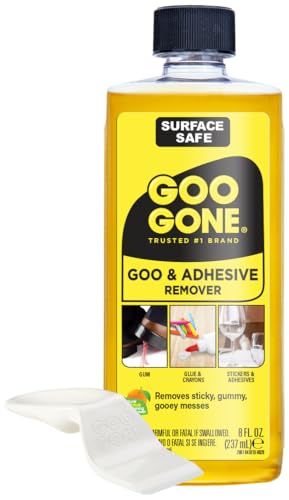
Goo Gone Original Liquid is a versatile adhesive remover with a citrus-cleaning formula designed to safely restore surfaces without harming them. It’s well-suited for glass alongside labels, wax, gum, glue, tar, and crayons. The product’s strength is its broad applicability around the house—from wine glass label removal to adhesive residue cleanup on windows and tables. Choose this for general-purpose tasks where glass is involved but avoid overly porous materials that could absorb the solution.
Perco Glue Off Adhesive Remover
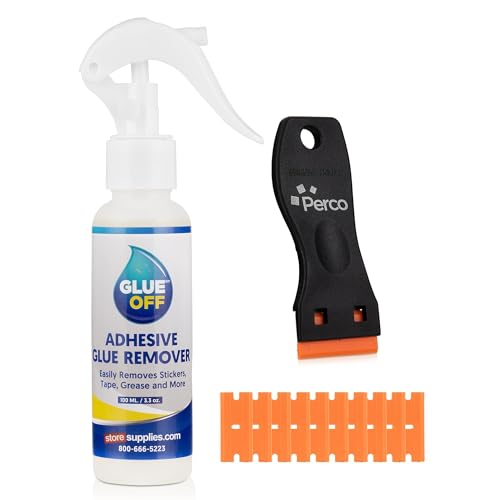
Perco Glue Off targets tough messes and is effective on silicone caulk, adhesives, sealants, tree sap, wet paint, glue, tar, wax, and grease. It performs well on metal, painted car surfaces, plastics, and finished wood. The product warns against use on delicate or porous surfaces such as rubber, leather, fabric, unfinished wood, unsealed stone, and matte finishes. Best for automotive and durable surfaces; better avoid on textiles or unsealed materials.
Goo Gone Sticker Lifter
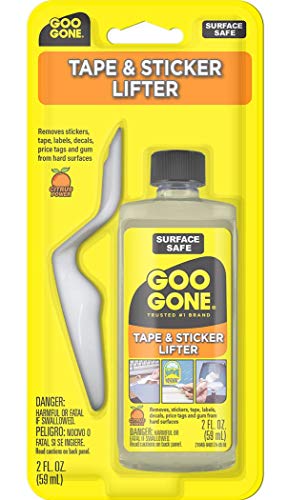
Goo Gone Sticker Lifter specializes in stickers, labels, decals, and gum. It uses a citrus-based formula to remove goo without harming surfaces, making it suitable for glass, metal, plastics, and painted areas. Best for quick sticker removal on glass surfaces like windows or glass tabletops. A limitation: results can vary with heavy, multi-layer decals or thick adhesives; a second pass may be needed.
Adhesive Remover Spray 5.03oz – GleamGlee

GleamGlee’s Adhesive Remover Spray is a powerful option for stubborn messes, including glue, tape residue, labels, silicone, and more. It’s designed for multi-surface use—glass, metal, plastic, wood, car surfaces—without scratching finishes. The included scraper helps lift gunk quickly. Best for quick, controlled cleanups; avoid using on very delicate surfaces or porous materials where the exposure may be excessive.
3M Adhesive Remover

3M Adhesive Remover blends non-abrasive solvents to dissolve adhesive residues without harming cured paint, making it useful during and after collision repair. It’s also available in an easy-to-use aerosol can for broad coverage. Best for automotive glass and painted surfaces where residue removal is necessary; better to follow product directions for spray use near windows and avoid oversaturation on delicate coatings.
FAVIRZCE Adhesive Remover Spray

FAVIRZCE’s Adhesive Remover Spray tackles stubborn residue including stickers, decals, glue, tar, gum, and wax. It’s marketed as automotive-safe and household-friendly, with a focus on removing decals and road grime without harming clear coats or paints. Best for vehicle glass and exterior windows; consider testing on a small area first if you’re removing delicate labels on glassware or premium items.
Buying Guide
What to consider when buying an adhesive remover for glass:
- Surface safety: Look for citrus-based formulas that advertise glass safety, and always test on an inconspicuous spot first.
- Residue and finish: Some removers are residue-free, while others may require wiping and a second pass on thick adhesives.
- Versatility: If you need to treat glass along with metal, plastic, or painted surfaces, choose multi-surface solutions.
- Application method: Gel formulas cling to vertical surfaces; sprays offer quick coverage; scrapers aid removal on stubborn gunk.
- Ventilation and odor: Low-odor options help in indoor use; citrus scents can aid odor masking but ensure good ventilation.
- Porous materials caution: Avoid porous or delicate surfaces like unsealed stone or uncoated wood unless the product specifies compatibility.
Frequently Asked Questions
- Can these products safely remove adhesive from glass without scratching?
– Most products advertise glass safety, but always test first and use a gentle wipe to avoid micro-scratches. - Which remover is best for stickers on glass windows?
– Gel formulas or multi-surface sprays with a scraper are often most effective for stickers on glass. - Is a citrus-based remover preferable for glass surfaces?
– Yes, citrus-based formulas are commonly recommended for glass and hard surfaces due to their balance of cleaning power and gentleness. - Should I avoid using these on etched or frosted glass?
– For delicate glass finishes, use the mildest product and test on a hidden area before broad application. - Do I need to rinse after using these removers on glass?
– A light wipe with a damp cloth is typically sufficient; refer to product directions for any required post-cleanup steps. - Are there risks to painted glass or glass with coatings?
– Some removers can affect coatings; check the label and test before applying widely on coated glass surfaces.