Best Scratch Remover for Mirrors and Glass Surfaces in 2026
Answering the buyer’s search, these scratch removers target glass surfaces like mirrors, car glass, and shower doors. They vary from cerium oxide powders to liquid polishes and heavy-cut compounds. This guide highlights five top options, who they’re best for, and practical tips to choose. Whether you’re restoring clarity on a mirror, tackling water spots, or removing light to deep scratches on glass, you’ll find a suitable product here. The right pick depends on surface type, scratch depth, and your preferred application method.
| Product | Best For | Why This Product |
|---|---|---|
| 1) Scratch Remover Powder (Cerium Oxide) | Light scratches on glass and mirrors | Good for restoring clarity with polishing slurry |
| 2) Meguiar’s M105 Ultra Cut Compound | Moderate to heavy defects on automotive paint | Fast cutting with high gloss finish |
| 3) 1.69FiOZ Cerium Oxide Glass Polish | All glass surfaces including mirrors | All-in-one polish with brush for easy use |
| 4) Menzerna Heavy Cut Compound 1000 | Deep scratches and sanding marks | Professional-grade, compatible with polishing machine |
| 5) Chemical Guys VSS One-Step | Light to moderate scratches on various paints | One-step cut and finish for gloss restoration |
Cerium Oxide Glass Polishing Powder – Mirror Clarity

Best for: Glass surfaces that need light restoration, like mirrors, car windows, and shower doors. This powder is designed to remove oil films, water spots, haze, and light scratches when mixed into a slurry with water. It’s suitable for glass surfaces only, avoiding plastics or painted surfaces. The product’s polish slurry approach makes it ideal for modest blemishes without heavy cutting.
Why selected: It provides a chemical-free slurry method that’s effective on clear glass and mirrors, with clear guidance to mix with water for consistent results. Best used by beginners or DIY enthusiasts focusing on glass clarity rather than heavy paint correction.
Caution: Not recommended for plastic, acrylic, or painted surfaces. Always test on a small area first to judge slurry strength and keep away from aluminum edges to avoid etching from older hardware.
Meguiar’s M105 Ultra Cut Compound – Heavy Defect Removal

Best for: Automotive finishes with moderate to heavy defects like scratches, swirls, and oxidation. Although focused on paint, it’s included here for readers who work with glass-coated or painted glass surfaces that need a strong cutting action before polishing.
Why selected: The product’s fast-cutting capability helps remove deep imperfections while delivering a high-gloss finish when paired with proper polishing steps. It’s a staple for professional detailing workflows where heavy correction is required.
Caution: Use a compatible pad and machine setting to minimize potential holograms or induced micro-scratches on sensitive coatings. This is a paint-focused compound, so avoid misapplying on bare glass without proper guidance.
Cerium Oxide Glass Polish With Brush

Best for: All automotive and household glass surfaces, including mirrors, windshields, and glass panels around the home. This kit emphasizes a complete system with a polishing liquid and brush for ease of use.
Why selected: It combines cerium oxide’s cutting power with an included brush for straightforward application. Ideal for occasional DIY polishing where a single kit handles multiple glass surfaces and spot-cleaning tasks.
Caution: While effective, the kit’s strength is best controlled with light to moderate pressure and a steady motion to avoid over-polishing delicate edges or laminated glass components.
Menzerna Heavy Cut Compound 1000 – Deep Scratches

Best for: Deep car surface scratches and sanding marks where heavy correction is needed before finishing. This compound is designed for use with orbital or rotary polishers and can also be applied by hand for more control.
Why selected: It provides strong correction without excessive effort, especially when paired with the right pad. It’s a reliable option for professionals and serious hobbyists seeking a near-new look after deep blemishes.
Caution: Requires careful machine handling to prevent swirl marks or holograms if overworked or used with improper pressure. Best results come from matching the pad and speed to the product’s strength.
Chemical Guys VSS One-Step Scratch & Swirl Remover
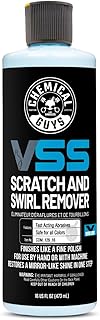
Best for: Light to moderate scratches and swirls on a variety of paints, finishing to a high gloss in one step. Its one-step formula makes it suitable for quick correction without extra steps.
Why selected: It combines cutting action with finishing polish in a single product, simplifying workflows for DIYers and pros alike. The formula is designed to be safe on clear coats, single-stage, and ceramic-coated finishes.
Caution: May require more effort on heavily oxidized finishes. Always test a small area to confirm compatibility with your paint type and coating before full application.
Buying Guide: How To Choose The Right Scratch Remover
- Surface type matters: Glass and mirrors require cerium oxide-based powders or glass-specific polishes, while automotive paints benefit from dedicated cut compounds and finishing polishes.
- Scratch depth and finish goal: Light water spots and haze respond to cerium oxide slurries or one-step polishes; deeper scratches may need a heavy-cut compound followed by a glaze or glaze-like finish.
- Application method: Slurry-based powders need water mixing and careful slurry control. Liquid polishes require coating and buffing with appropriate pads or brushes. Consider whether you prefer machine or hand application.
- Protective considerations: Some products are specifically for glass only; others are safe for clear coats and ceramic finishes on paints. Verify surface compatibility to avoid damage.
- Ease of use vs. results: One-step products offer convenience but may not deliver the deepest correction. For severe defects, a multi-step approach with a dedicated cut and polish may be best.
Frequently Asked Questions
- Q: Can these products be used on plastic or acrylic mirrors? A: Most cerium oxide powders are designed for glass surfaces only; plastics and acrylics may scratch or craze under similar treatments. Always check the product’s compatibility before use.
- Q: Is machine polishing required for best results? A: Deep scratches often respond better to machine polishing with a proper pad. Hand polishing can work for light blemishes or for spot treatment.
- Q: Can I use a cerium oxide powder on car windshields? A: Yes, but follow the product’s guidance for water slurry consistency and use a gentle, circular motion to avoid edge damage.
- Q: How do I know which product to choose for mirrors? A: If the issue is haze or light scratches, a cerium oxide slurry or glass polish is typically sufficient. For deeper marks, consider a heavy-cut compound used with care on the reflective surface’s edges.
- Q: Are these products safe on coated glass or laminated glass? A: Test a small, inconspicuous area first. Some coatings or laminates may react differently to polishing compounds or cerium oxide.
- Q: Do I need to seal after polishing glass? A: Sealing isn’t always required for glass surfaces, but applying a glass sealant or protective coating can help reduce water spots and make future cleaning easier.