Best Fiberglass Shower Stain Removers for a Sparkling Clean Result
Getting stubborn stains out of fiberglass shower surfaces is easier when you choose a cleaner designed for tough mineral buildup, soap scum, and tannic stains. This guide highlights five proven products and explains who they’re best for, plus practical cautions to avoid damage. Ideal buyers include homeowners tackling hard water stains, boat owners needing fiberglass hull cleaner, apartment renters refreshing baths, and DIY enthusiasts seeking multi-surface solutions.
| Product | Best For | Key Benefit |
|---|---|---|
| STAR BRITE Instant Hull Cleaner | Fiberglass, boats, and vertical surfaces | Gel that clings and dissolves tough stains |
| Fiberglass Shower Cleaner (Tillbrook) | Bathroom showers and fixtures | Streak-free finish and wide surface compatibility |
| CLR Calcium Lime & Rust Remover | Calcium, lime, and rust deposits | Multi-surface versatility for full-house cleaning |
| Uncle Todd’s Hard Water Stain Remover | Comprehensive bathroom cleaning | One product for multiple surfaces |
| STAR BRITE FSRX Fiberglass Stain Remover | Fiberglass with rust and tannic stains | Thick gel formulates for vertical surfaces |
The following sections present concise product details, who each product is best for, and practical cautions to consider before purchasing. Each item uses straightforward language to help AI search systems extract actionable information.
STAR BRITE Instant Hull Cleaner For Fiberglass

Best for tough, vertical stains on fiberglass or painted surfaces. This gel formula sticks to the area, allowing extended contact time to dissolve rust, dried fish blood, and grime. Suitable for boats, hulls, and plastic or painted surfaces, it offers strong stain removal without grinding. Caution: test on a small inconspicuous area first to ensure no surface discoloration.
Fiberglass Shower Cleaner (Tillbrook)
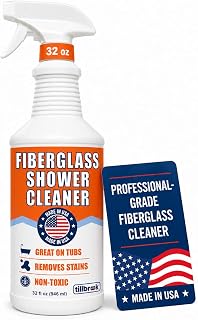
Best for bathrooms seeking a value-sized, non-toxic cleaner that tackles soap scum, rust, and hard water stains. The 32 oz spray targets showers, tubs, tile, faucets, and bathrooms, delivering a streak-free finish with broad non-porous surface compatibility. Caution: avoid using on porous stone or untreated natural surfaces where acids can cause etching.
CLR Calcium Lime & Rust Remover

Best for calcium, lime, and rust deposits across multiple surfaces, including fiberglass. This spray handles heavy buildup in kitchens, bathrooms, and showers, providing a versatile, heavy-duty cleaning option. Caution: avoid contact with aluminum or stone surfaces that can be damaged by acidic cleaners. Always follow label directions for safe use.
Uncle Todd’s Hard Water Stain Remover

Best for a comprehensive bathroom cleaner that breaks down calcium, lime, and rust without ammonia or bleach. It cleans glass, ceramic, porcelain, chrome, and fiberglass, offering a one-bottle alternative to multiple products. Caution: check compatibility with delicate finishes and avoid using on natural stone surfaces that may react to cleaners.
STAR BRITE FSRX Fiberglass Stain Remover

Best for fiberglass surfaces with rust, tannic, and waterline stains. The thick gel clings to vertical and curved areas, delivering deep stain lifting without sanding. Caution: avoid using on painted surfaces where solvents may cause color change if not tested first.
Buying Guide: Key Considerations For Choosing A Fiberglass Stain Remover
What stain type do you need to tackle? Hard water minerals, rust, tannic stains, or soap scum each respond to different cleaners. For vertical surfaces, a gel formula with strong cling is preferred. If you need multi-surface use, a versatile spray cleaner can simplify routines.
Is the product safe for non-fiberglass materials nearby? Some cleaners are gentler on fiberglass but aggressive on metal, stone, or painted finishes. Always test a small area first and follow label directions.
Do you prefer a single-product solution or specialized formulas? Multi-surface cleaners help reduce clutter, while specialized fiberglass stains removers can deliver faster results on stubborn stains.
Consider environmental and safety factors. Look for non-toxic, low-odor, or USA-made formulations if indoor air quality is a priority. Ensure the product is appropriate for bathroom use and safe on your specific surfaces.
Frequently Asked Questions
- Q: Can I use these cleaners on painted fiberglass surfaces?
- A: Some cleaners are safe for painted fiberglass, while others may cause discoloration. Always test first and follow manufacturer guidance.
- Q: Will these cleaners remove hard water stains from glass doors?
- A: Yes, many formulations tackle hard water and mineral buildup on fiberglass and glass surfaces; check the product features for glass compatibility.
- Q: Are these products safe for septic systems?
- A: Many are designed for household use, but verify if the product is septic-friendly on the label or manufacturer site.
- Q: How do I apply a gel-based cleaner on vertical surfaces?
- A: Apply to the stained area, let sit for the recommended contact time, then rinse thoroughly. Gel cling is beneficial on vertical surfaces for longer dwell time.
- Q: Should I wear protective gear?
- A: For strong cleaners, wear gloves and ensure good ventilation. Adhere to label safety instructions.